
Prenuptial and postnuptial agreements are legal contracts that play a significant role in modern marriages, offering couples a way to manage their financial affairs and protect individual assets. These agreements, while sometimes viewed skeptically, can provide clarity and security for both parties entering or already in a marriage.
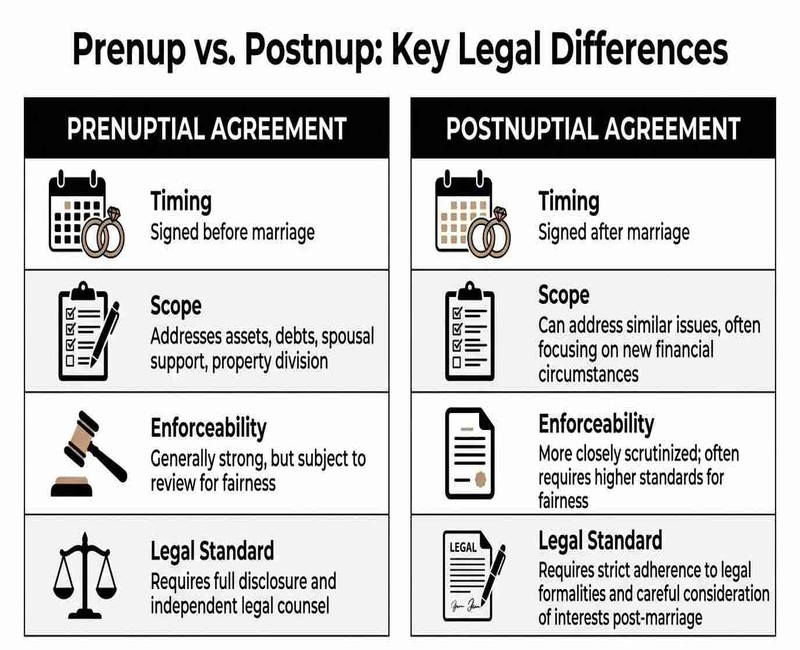
A prenuptial agreement, commonly known as a prenup, is established before the marriage takes place. It outlines how assets will be divided in the event of divorce or death. This contract can cover various aspects such as property division, spousal support, and even debt responsibilities. Prenups are particularly beneficial for individuals with substantial personal wealth, business interests, or those entering second marriages with children from previous relationships. By setting clear expectations from the outset, prenuptial agreements help mitigate potential conflicts and misunderstandings regarding financial matters.
In contrast, postnuptial agreements are formulated after the couple has married. While similar to prenups in terms of content and purpose, postnups cater to couples who may not have considered or finalized an agreement before their wedding day. Various circumstances might prompt a couple to draft a postnup: changes in financial status due to inheritance or career advancements; shifts in marital dynamics; or simply gaining new perspectives on asset management after experiencing marital life together.
Both types of agreements require full disclosure of all assets by both parties involved. Transparency ensures that each party enters into the contract with complete understanding and consent regarding what they stand to gain or lose under different scenarios outlined within the agreement. This openness is crucial as it prevents future disputes over hidden assets which could render parts of the agreement void.
It’s important to note that prenuptial and postnuptial agreements must adhere to certain legal standards to be enforceable. They should be fair at the time they are signed and executed without coercion from either party involved. Both partners should ideally have separate legal representation when drafting these documents so that each individual’s rights are adequately protected.
Despite some misconceptions about these contracts fostering distrust among partners, many view them as practical tools for ensuring mutual respect regarding financial independence within marriage. Rather than anticipating failure or conflict within the relationship framework itself—prenups and postnups aim at safeguarding individual interests while respecting shared commitments made during matrimony.
Understanding these agreements’ nuances allows couples greater control over their future regardless of unforeseen circumstances down life’s path together—ultimately providing peace-of-mind knowing there’s pre-agreed upon structure handling sensitive issues if ever needed later down-the-road ahead thereby reinforcing trust through transparency today!
About the Author